Showing posts with label die. Show all posts
Showing posts with label die. Show all posts
Saturday, July 22, 2017
Die Hard Trilogy Die Hard Longplay
Die Hard Trilogy Die Hard Longplay
Die Hard Trilogy - Die Hard Longplay
I think it is an ok game for 1996, but i think it is more suited for arcade machines but somehow ended up on consoles.
It is a hard game but if you get into it you can have a lot of fun well at least i did.
Other then this mode the game has two additional mode one is a Rail Shooter and another is driving game, all in all it has a good lasting appeal.

Tuesday, July 4, 2017
Die Hard Trilogy 2
Die Hard Trilogy 2


Die Hard Trilogy 2: Viva Las Vegas Gallery Image #1 � Die Hard Trilogy 2: Viva Las Vegas Gallery Image #2
Thursday, June 15, 2017
Die beste Android TV Box 2016 NVIDIA Shield TV Android
Die beste Android TV Box 2016 NVIDIA Shield TV Android

Ich muss aber auch gleichzeitig warnen, dass das nur der Fall ist, wenn man auf Garantie verzichten kann bzw. ich bin mir noch nicht einmal ganz sicher, ob die Garantie erlischt aber es soll gleich zu Beginn eine Warnung f�r alle sein, die sich mit dem Gedanken nicht anfreunden k�nnen.
Au�erdem kommt es auf das Einsatzgebiet an! Ich habe keinerlei Interesse Spiele zu streamen! Die Shield soll mir als Mediabox dienen - Filme �ber Datentr�ger abspielen, Internetradio, Streams, Emulatoren f�r Spiele, Android-Spiele, usw. usf.
Damals hat eine neue Box aus China etwa 70� gekostet, da 100$ �blich waren, was umgerechnet etwa 60� sind bzw. waren und mit 19% hat der ganze Spa� mit DHL rund 70� gekostet. Heute sieht das ganze anders aus... die Preise sind gestiegen, der Dollar ist st�rker bzw. der Euro schw�cher, DHL will auch rund 12� von uns haben und mit 19% kommen wir auf rund 120�. Wenn ich jetzt mal bei meinem China-H�ndler vorbei schaue, dann kann ich etwa mit 150$ nur f�r das Ger�t rechnen, was das ganze sinnlos macht, da ich f�r 200� mir bereits hier einen (mini) Rechner kaufen kann (beispielsweise Intel NUC).


Die Shield ist sehr hochwertig, selbst beim Zubeh�r kann man nichts schlechtes sagen, die W�rmeentwicklung h�lt sich in Grenzen, Abmessungen gefallen mir sehr, da ich die Shield sogar unter dem TV-Tisch schieben k�nnte und der ganz gro�e Pluspunkt ist die Community!
 |
| NVIDIA Shield TV mit Custom ROM und Nova Launcher |


Wer mit dem Gedanken spielen sollte den gleichen Weg zu gehen, hier eine kurze Installationsanleitung, wie Ihr die Custom ROM installieren k�nnt.
Anleitung auf eigene Gefahr! Mit dem Flashen einer Custom-ROM/einem Custom-Recovery/entsperren des Bootloaders verliert Ihr die Garantie und Gew�hrleistung auf euer Ger�t! Weder ich, noch sonst irgendwer �bernehmen eine Haftung, f�r irgendwelche Sch�den, die durch das befolgen dieser Anleitung geschehen!
Die Custom ROM k�nnt Ihr bei XDA herunterladen. Ich verwende Version 1.1 von zulu99 (externe Link). Dort findet Ihr auch ein Video, welches euch erkl�rt, wie das ganze am Ende aussieht (auch wenn es von Version 1.0 ist).


MicroUSB-Kabel mit Rechner und der Shield verbinden.

Sobald der Befehl adb devices ausgef�hrt wird, erscheint eine RSA-Abfrage auf der Shield TV.

Hier dann einen Haken setzen (Von diesem Computer immer zulassen) und mit OK best�tigen, dann den Befehl adb devices wieder ausf�hren und wie im vorletzten Bild sollte dort jetzt eine Zahlenkombination und device dahinter stehen. Ist das der Fall, dann mit adb reboot bootloader weiter machen. Die Shield wird einen Neustart durchf�hren.
Die Shield startet nicht wie gewohnt neu und sollte das der Fall sein, dann einfach im Terminal weiter machen und erst einmal das neue unbekannte Bild ignorieren.

Mit dem Knopf auf der Shield (vorder Seite) m�sst Ihr das neu erschienen Bild best�tigen und bei der 16 GB Version etwa 5 Minuten warten, da dieses formatiert wird. Die Shield wird dann einen Neustart durchf�hren und sollte das nicht passieren, obwohl es wie im Bild oben mit Finished best�tigt wurde, dann den Befehl fastboot reboot durchf�hren (war bei mir nicht notwendig).
Nach dem Neustart wurden alle Dateien gel�scht und somit auch die Shield TV zur�ckgesetzt. Jetzt m�sst Ihr Debugging wieder aktivieren und die Shield wieder mit dem Befehl adb reboot bootloader neu starten - wie wir es zu Beginn getan haben.


Als ich zu Hause war, habe ich �berpr�ft, ob die NVIDIA Shield TV mit Linux verbunden wird.
Ihr k�nnt die selben Befehl verwenden, wie f�r Windows, nur m�sst Ihr zu Beginn dies beachten:

Schlie�t diese deshalb erst einmal an und f�hrt den Befehl lsusb aus.

F�r uns sind die ersten beiden Zahlen nach dem ID wichtig.


SUBSYSTEM=="usb", ATTR{idVendor}=="18d1", MODE="0666", GROUP="plugdev"
SUBSYSTEM=="usb", ATTR{idVendor}=="18d1", ATTR{idProduct}=="4ee7", SYMLINK+="android_adb"
SUBSYSTEM=="usb", ATTR{idVendor}=="18d1", ATTR{idProduct}=="4ee7", SYMLINK+="android_fastboot"
STRG gedr�ckt halten und O dr�cken, dies mit Entertaste best�tigen, dann wieder STRG gedr�ckt halten und mit X das Fenster schlie�en.
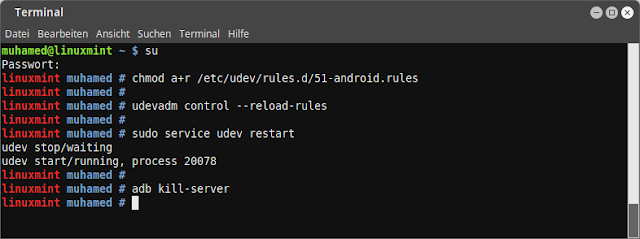
[1] chmod a+r /etc/udev/rules.d/51-android.rules
[2] udevadm control --reload-rules
[3] sudo service udev restart
[4] adb kill-server

Mit der Firmware ist es f�r mich die beste Android Box 2016. Dabei bleiben auch die gute Funktionen erhalten, wie zum Beispiel diese:


Netflix ist zwar nicht installiert aber kann dann ohne Probleme als APK oder direkt im Google Play geladen werden. Es gibt auch eine 4K Version, welche Ihr im Internet finden k�nnt, damit auch voll und ganz 4K unterst�tzt werden.
Das einzigste Negative w�re das Gamepad! Dieses funktioniert nur noch �ber Kabel und nicht mehr kabellos. Die Fernbedienung besitze ich nicht, deshalb kann ich dazu auch nichts sagen. Mich st�rt das nicht, da ich sowieso eigenes Zubeh�r habe und auch das Gamepad von Xiaomi verwende, welches dank Bluetooth problemlos kabellos genutzt werden kann.

Sollte jemand Fragen haben, dann stellt diese einfach.
Monday, May 15, 2017
Die Shot Next Gen AMD Orochi Bulldozer 8 Core
Die Shot Next Gen AMD Orochi Bulldozer 8 Core

Pada bulan Agustus AMD memberikan preview singkat dari apa yang berasal dari teknologi generasi mendatang yang dikenal sebagai Bulldozer.
Sekarang kita bisa melihat salah satu dari awal mati-tembakan pertama dari prosesor "delapan-core" Orochi yang berbasis pada teknologi Bulldozer dan dibangun pada proses 32nm.
Tidak seperti Llano, chip ini tidak akan menjadi bagian dari inisiatif Fusion untuk mengintegrasikan GPU di dalam mati. Tetapi juga tidak seperti Llano, Bulldozer didasarkan pada teknologi AMD generasi mendatang, sementara saham Llano yang hubungan dengan Phenom CPU.
Either way, kita mengharapkan hal-hal besar dari AMD pada tahun 2011.
Source: X-bit labs, Toms Hardware
Saturday, April 22, 2017
Die Mechanic Flavors
Die Mechanic Flavors
Yesterday on the bus I started mentally comparing Dark Heresys roll-under d100 die mechanic to that of Zludges 2dF. In particular, I was curious how much such a conversion would affect the percentage likelihood of success in different situations. But I came to realize that this is too low-level of a comparison. Instead, its more important to consider the assumptions behind a mechanic and the resulting "flavor" that it imparts.
Heres what I mean in terms of 4 different die mechanics Ive been working with lately:
d20: linear skill variation. Here, the die roll just provides a random bonus to the skill. The average d20 roll is about 10 (10.5, actually), so against a DC of 10+skill, theres about a 50% chance of success or failure. If using critical success (natural 20) or critical failure (natural 1) rules, theres a 5% chance (for each one) each roll, regardless of the characters skill level. Because the roll distribution is linear, you are just as likely to roll at the extremes of the range (+10 or -10) as you are at the characters actual skill (+0).
Zludge: curved skill variation. As for d20, this just provides a bit of randomness centered on the characters skill level. However, a curved roll distribution is weighted towards the skill level: theres a 33% chance of rolling +0 on 2dF, but only an 11% chance of rolling +2. If +0 is sufficient to succeed, this gives a 66% success rate.
I feel this curve limits some of the "gambling" flavor of d20, especially since the range of possible roll values is so small. Its almost like playing diceless--its unlikely youll get very "lucky" with a roll. But this goes the other way too: its more unlikely youll fail miserably just due to a bad roll. Instead, you have to intelligently play based on your characters skill level.
Dark Heresy: linear roll-under. Here, you roll d100 and roll under your skill value. The degree of success is determined by just how far under you roll. Thus, as your skill level increases, so does both the likelihood of success and the possible degree of success.
In Dark Heresy, the average skill starts at about 30, so this gives only a 30% success rate (though this can be modified based on the circumstances; it seems DHs default curve center-point is for a pretty challenging task). Since the distribution is linear, each skill improvement gives the same return: +5 skill increases your chance of success by 5%, regardless of whether you purchase the increase at a low or high skill level.
Assuming few characters ever achieve the max skill level of 100, there is always a chance of failure on a roll. It feels that your fate is controlled much more by chance with this mechanic: your skill only sways the likelihood of success, but there are no guarantees here. Every roll is a gamble. (I actually like QAGSs "the Price is Right" spin on the linear roll-under mechanic a little better, but it produces the same results.)
GURPS: curved roll-under. As a roll-under system, this too seems to have a bit more of a gambling feels. For example, youre just as likely to roll an 18 on 3d6 when you have a skill of 8 as you do with a skill of 16. However, since the distribution is curved, at least most rolls will be centered around 10.5. The chance of rolling an 18 is only 1/216. Skill increases at higher levels provide increasingly limited returns.
After considering these differences, I think I am correct in going with the Zludge die mechanic, since that is the flavor I want in my games. As applied to Dark Heresy, this may reduce the "grittiness" a bit. However, I do still plan to try QAGS a bit, to see if my expectations for a linear roll-under system really do bear true.
Subscribe to:
Posts (Atom)